Capital City Grange

  • Email
  • Facebook
  • YouTube
  • Grange Notes
  • Photo Gallery
  • Contact Us
  • Home
  • About Us
    • About Us
    • History of the Capital City Grange
    • Grange Officers & Committees
    • Contact Us
    • Grange Notes
  • Dancing
    • Contra Dancing
    • Afro-Caribbean Dance
  • Rentals
  • Support the Hall
    • DONATE
    • Friends of the Capital City Grange Hall
    • Hall Projects
    • Completed Projects
  • Community
  • Calendar

Dave Zuckerman on food systems, planting veggies and more

May 8, 2020 by Tova

Grange Notes by Tim Swartz, Grange President (with everyone’s help), May 8, 2020

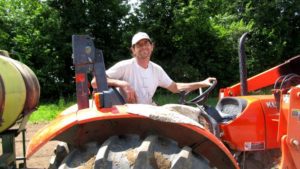
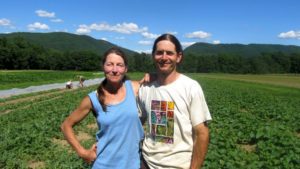
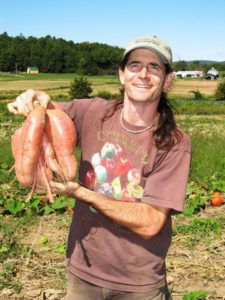
With his wife Rachel Nevitt, Dave Zuckerman has run Full Moon Farm for decades.   As an organic farmer and also as a politically involved Representative, Senator and Lt. Governor, Dave has been involved in our “food system” in many ways.  In the May 2nd Zoom program, he shared farming facts, thoughts on how the system could change, and ideas for making those changes a reality.
If you missed the Zoom meeting, here’s a recording: I’ve posted an audio recording made by Carl on the Grange website Calendar listing, just click on this link to the 5/2 program, and click the “Play” arrow.

Starting off the program:       

Dave was introduced by Carl Etnier, our Grange Lecturer, who set up the program, provided the Zoom platform from East Montpelier, where he is a Selectboard member, and moderated the meeting.   We had about 25 poeple, by my count–a decent turn-out given the beautiful weather that tempted many others outside!  The attendees included a mixture of Grange members and friends, plus a variety of “new” folks–a sign that our publicity was working. 
       Carl introduced our guest speaker, noting that Dave had said, back when he was a representative, that VT could conceivably make a transition to food self-sufficiency in one growing season.  Dave elaborated on that statement from 20 or so years ago.  Looking at the situation today, he said that sort of shift would require a “major cultural shift”, as well as significant reconfiguring of our infrastructure.   While farmers could probably ramp up production that quickly, other changes would take time, planning and incentives to achieve.  Some of the ideas he cited for changes we could make:

  • Change the food expectations of consumers to match the products which can be produced in VT–a long-term proposition.
  • Use the food-processing we already have in the form of restaurant kitchens (currently many closed) to provide prepping/freezing/canning of farm products.
  • Build storage facilities for produce and meats, to allow year-round food supply, not just during the growing season.

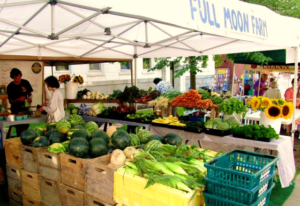
       He also used the example of his & Rachel’s Full Moon Farm, which employs 5 people year-round, plus 6 seasonal employees, growing vegetables on about 15 acres, plus about 100 chickens and 40 pigs.  Their peak storage need in October/November is for about 100,000 lbs. of food, in 4 storage rooms.  This is about the equivalent amount of total food which is consumed in one day in Chittenden County.  This will be the sort of storage we would need to scale up to self-sufficient food production for VT.        Dave also commented on the “Defense Production Act” which the President invoked to “require” meat processing plants to re-open–he pointed out that this order can only force the owners to open the plants.   It will be economic necessity which may cause the actual workers to return and risk their lives–the owners will not be the ones facing those dangers.   This highlights what the COVID-19 crisis has shown us–that “essential workers” are those on the front lines–and not just medical workers.  Now, the “new” essential folks are recognized to include the farmworkers, food processors and retail workers, all at the lower end of the payscales.   Their working conditions put them at higher risk at the same time they are being deemed “essential”.

Farming/gardening suggestions:      

Knowing that Grange members and friends are interested in growing food (as well as eating it!), Dave talked about some of the issues and decisions he and Rachel are dealing with on their farm in Hinesburg, in the farthest southern end of Chittenden County.   They have been pushing planting earlier, hoping for the best as farmers must, planting lettuces, spinach, beets and radishes about April 5th, about 2 weeks earlier than they used to–in hoop houses, not uncovered.   They have been “hardening off” brassica transplants–cabbages, broccoli, brussel sprouts, etc.–in preparation for planting them.  They are using colored plastic mulches, including red for tomatoes to speed ripening, silver for alliums (onions, leeks, scallions) to reduce thrips in the root ends.  He recommends that early-planted zucchinis have some flowers pinched off to reduce the number of early fruits developed,before the plants develop completely. 
       Dave also discussed the difficulties of frost at this point in the season–at their farm, it was very close to freezing in the week before our May 2nd meeting.  (Note–in Northfield Falls, it was in the low-mid 20s this week)  He related stories of covering strawberries, plus spraying water (which releases heat as it changes from liquid to ice), and seeing ice on top of the covering, and liquid water dripping off below.   There are limits to how much you can raise the warmth for the plants, unless they are in a heated greenhouse!

Questions and discussions:      

Following Dave’s presentation as summarized above, Carl opened the discussion section of the meeting–as we expected, the attendees had a wide range of questions they wanted to bring up; here are a few:

  • How to change the dairy farming “culture” to consider ways to reduce milk production to keep prices higher and more profitable?  Dave discussed the VT “dairy culture” as an expression of pride, farms maintained by the same families for generations, providing a strong identity.  He would like to see a conventional (not organic) “VT Milk” brand established, with higher standards for quality, good treatment of farm workers, etc., as a way to get higher prices in the larger, southern New England markets.  He also talked about how he had to convince farmers at an American Farm Bureau conference that a young “hippie farmer” like him could be a “real farmer” by showing that he understood the business aspects of selling his produce, citing pricing and quantities produced and sold at the Burlington Farmers’ Market, for instance.
  • How can the Grange, Grange members and others support an increasing local food supply?   Dave says about the most useful thing–besides buying local food of all types–is to work with existing local groups, like Rural VT for instance, who have been working on this problem for years.   A significant project of theirs is promoting on-farm, small-scale animal processing capacity, to make it easier for farmers who raise animals for meat.
  • How can local farmers increase their ability to make a livable wage and sell food at prices which “normal” people can afford to buy it?  Dave agreed that this is a dilemma, one which will require structural changes. For example, switching to a single-payer health care system which cuts the cost of health insurance could free up income for people to buy more produce and other nutritious, fresh foods, which in turn will help maintain better health.   He also discussed the role of personal choices about how people spend their money.
  • Another attendee asked about the prospects of getting more organic grain grown locally–especially having heard that VT was part of the “breadbasket” of Northern New England before the “west”–at that time Ohio–took over growing wheat.  Dave said that our climate is not ideal, and climate change is leading, it seems, to wetter springs and falls, which present problems for harvesting wheat in particular.  Winter wheat and rye seem more likely possible crops to him.  [Note:  check out northerngraingrowers.org to find out what people are doing to re-learn how to grow grains.   The Northern Grain Growers Ass’n is working with UVM Ag School to spread info about these types of crops.]
  • Alison Forrest, who as many of you know is the head of the Food Service for the Huntington school, told us that she has been sending out food from the school to students and their families, a service that is now extended through June.   She strongly urges families to apply for free or reduced-price lunches, especially those who have lost income due to the pandemic.  This program will provide a special EBT card for $5.50 per child per day–7 days a week to supplement food purchasing.  PLEASE SPREAD THIS INFORMATION to all families you know!

I’ve tried to capture a good bit of the discussion, please listen to the recording to get the whole story!

1/2 hour Grange meeting before the program              

Our “executive session” commenced with Grange Musician singing and playing piano, while some of us at home, at least sang along–at our April meeting we learned that it’s just not possible to sync-up group singing on Zoom!
       After a brief check-in on how we are all doing, we had a brief discussion of Grange finances.  With reduced expenses (no cleaning, no plowing and very minimal heat and electricity use), we are holding steady with contributions from a few renters who are continuing to pay some rent to support us.  We will gradually deplete our savings as this goes on, of course.  
       We did discuss the Gillespie Fuels options for heating oil payment for the upcoming year, and the group endorsed my recommendation that we sign up for budget payments, but no “protected” pricing, since that comes at a premium.   The group agreed that the current low prices may well continue due to the economic downturn and other market factors, and that our fuel use should be improved due to the excellent insulation added to the basement.  So it seems to make sense to “gamble” by taking the market price option.
        I reported that Northern Basements has completed the burying of the drain line from the sump pump, under the driveway on the West (Rt. 12) side of the Hall.  This is the last step, except for some painting, on the entire project!
       Patty Giavara, Chair of the Friends organization that funded and managed the project, reported that she is working on the final report to the Arts Council, the granting agency that will reimburse the Friends for 1/2 the cost of the project.  Since she is working more than full-time, this is taking some time, but she is making progress.
       Since the meeting, Merry & I have begun being contacted by the Montpelier Church of Christ about re-starting their Sunday morning services; at this point, we are advising them that under the Governor’s order we are not able to allow gatherings yet; we will continue to discuss the situation with them and other Hall users.   We have also reached out to our cleaning service about disinfectant cleaning, which we will certainly need to have done, as part of re-opening the Hall even for small groups who can maintain “social distances”.

For the short-to-medium term:  The Grange Hall is staying empty, and we can’t yet advertise our wonderful new lower-level for public use.   We can afford to stay closed, but we’ll be gradually depleting the savings that we have.   In that way, we are in the same boat as other organizations and individuals.
       Since we finished the basement renovations just before the shut-down, we have not been able to publicize our excellent “new” space.   While we have time, I am still asking for input about creating a marketing campaign that we can use when the very necessary restrictions are loosened, to advertise our facilities, including the lower-level with its new insulated walls, new carpet, new electrical outlets–and no more mildew!
       I would also like to publicize needs for volunteers for the work of other organizations, that people know about.   I believe we have a lot of readers of the Grange Notes who want to do community service work–and most have more time on their hands!   Let me know if you have a need our readers might be able to fill!
       You can also post this sort of info on the Capital City Grange Facebook page!  The link for this is also at the top of these Notes.
        On behalf of the Grange–Stay Home, Stay Safe and Stay Healthy!  

Wi-fi is free at the Grange Hall!      

Since 2014, we’ve offered Free Wi-fi there, and it’s available without a password outside the Hall as well as inside.  I found the best signal on the driveway on the West side of the Hall, that is the side closer to Rt. 12.  
       For Grange Notes readers in other parts of the state, the State Dept. of Public Service has posted a map of public Wi-fi hotspots all over Vermont.  You can get to it via this link:  https://publicservice.vermont.gov/content/public-wifi-hotspots-vermont.  We are listed there, along with hundreds of other locations.
        If you have kids who need broadband access, or you need it for working “from home”, these are all resources that will help.
A little history:  We got our Wi-fi router installed for free, as part of the “Vermont Digital Economy Project”.  The VDEP arranged for hotspots like ours and Wi-fi zones to be installed for public use all around the state.   The intent was to help communities stay connected, especially in cases of emergencies–like our current one!–which require good communications and strong community institutions. 
       The VDEP was funded by federal grants through the VT Council on Rural Development, in the wake of Tropical Storm Irene in 2011.   That statewide disaster revealed which communities recovered fastest–it was those with strong connections, strong communications and strong community institutions.   The Grange’s mission fits very well with these criteria, and the help we got through the VDEP made us a stronger community partner.   Besides the Wi-fi, we got help rebuilding our website, and were introduced to MailChimp as a tool to send these Grange Notes!  
         We greatly appreciate the help we got, and are eager to do our part to help those who need it in our current crisis.
        To learn more about the VDEP, visit https://www.vtrural.org/programs/digital-economy
Filed Under: Grange Notes

Dave Zuckerman on local food and food systems: May 2

May 5, 2020 by Tova

Grange Notes by Tim Swartz, Grange President (with everyone’s help), April 30, 2020

Join us on May 2nd, from 5 to 6 PM–a discussion with Dave Zuckerman:  learning from the Coronavirus crisis about how to improve our food system

Our 2nd “Virtual Program”, at 5:00 PM on May 2nd will feature VT organic farmer David Zuckerman, discussing the future of our food systems.   The COVID-19 crisis has made us all think more about how food gets to us.  Not everything is available on the shelves in our markets, and food is in the news.
       Now, grocery workers and farm workers are recognized as “essential workers”.   U.S. farms are having difficulties getting the immigrant workers they need.  Large food facilities like meat-packing plants are shutting down amidst spikes of COVID-19–and are being named as “essential businesses” under the Defense Production Act so they will be kept open.  Long distance supply chains seem more fragile than ever.   Millions of people are planting gardens–many for the first time.
       As a society, what are sensible policy responses to building a more resilient, self-sufficient food system?   As individuals, what are some of the best things for us to be planting to feed ourselves and help our neighbors?
       David Zuckerman has thought about food resilience for decades.  Besides being Lt. Gov., he is co-owner of “Full Moon Farm” in Hinesburg.  He’ll share his thoughts on these issues, and other questions people bring up in this hour-long Zoom meeting.
         To join this Zoom Meeting from your computer, follow this link: https://us02web.zoom.us/j/81592514215         (If you have not been involved in a Zoom meeting before, you will need to allow a few minutes to download & install the free Zoom connection.  Once you have done this, a window will pop up, offering a choice of “Phone Call” or “Computer Audio” for hearing the meeting.)
       With your computer, you will be able to see any visuals presented, plus the faces of others with webcams activated.  If you have a web-cam, we will be able to see you as well!

       To join this Zoom meeting from your phone, call this phone #: 
646-558-8656.  When prompted enter this “Meeting ID”: 815 9251 4215, followed by the # sign.

       It’s fine to try out these links before the meeting, you will just see/hear nothing before the meeting starts!  We will get to see how we like this program compared to the “GoToMeeting” set-up we used for the April meeting.   Zoom has made security enhancements since the problems experienced soon after many users started using it in the earlier days of the Coronavirus.

Spread the word:  please share this invitation with your friends, with your family, with the many people we hope you are staying in touch with!   These subjects are important to everyone!  This Program is completely free and open to the public!

Grange Lecturer Carl Etnier has set up this meeting with Dave Zuckerman, and will be the moderator for it.

1/2 hour Grange meeting before the programFrom 4:30 to 5:00: 

We will have a non-ritual Grange meeting, to discuss what is going on with finances and the Grange Hall, and to check in on how we are all doing.  GrangeMusician Matt Nunnelly will play and sing an opening song for us; we learned at the last meeting that we can’t sing along through the meeting app, but feel free to join in at home!
Treasurer Merry Shernock will present a Treasurer’s Report, and will discuss our minimal cash-flow; she’ll also be wearing her Rental Agent hat, and will report on our tenant relations.
       I will report on the Grange Hall; Patty Giavara will report on the final grant report that she has been writing up.
       Carl Etnier has set up a separate Zoom meeting for the Grange, separate from the Program meeting, to reduce confusion for people tuning in just for the David Zuckerman presentation.   Here’s how to connect:        To join this Zoom Meeting from your computer, follow this link: https://zoom.us/j/93075767470?pwd=OUZPS3N2VmUrUEJ5dXJzcCs5Mkpjdz09         (As noted above, if you have not been involved in a Zoom meeting before, you will need to allow a few minutes to download & install the free Zoom connection.  Once you have done this, a window will pop up, offering a choice of “Phone Call” or “Computer Audio” for hearing the meeting. 
       With your computer and an attached webcam you will be able to see the video

       To join this Zoom meeting from your phone, call this phone #: 
646-558-8656.  When prompted, enter this “Meeting ID”: 930 7576 7470, followed by the # sign.  You will then be asked to enter your “participant ID”–use the password:  508853.  When I tried this out, a couple of times the “meeting ID” number I entered correctly was not received–extra digits were “heard” according to the little voice in my ear, so be prepared to re-enter it a couple of times.

Send us feedback on this idea!  We will also be considering best ways to share this meeting and to moderate the discussion.  Please send us other suggestions for program ideas; Merry’s & the Grange Notes contact info is above, Carl can be reached at carl@etnier.net

For the longer term:  The Grange Hall is staying empty, and we can’t yet advertise our wonderful new lower-level for public use.   We can afford to stay closed for a while, but we’ll be gradually depleting the savings that we have.   In that way, we are in the same boat as other organizations and individuals.
      Our exemption from property taxes from the Town of Berlin will expire in March, 2021; we will have to campaign to keep this major savings in place.  We’ll be citing our service as a Wi-Fi hotspot, along with allowing Town organizations and residents to use the Hall for free–at least 46 times in 2019!  Can you help us with this campaigning when the time comes?
       Since we finished the basement renovations just before the shut-down, we have not been able to publicize our excellent “new” space.   While we have time, I would like to hear from people who can help us create a marketing campaign that we can use when the very necessary restrictions are loosened, to advertise our facilities, including the lower-level with its new insulated walls, new carpet, new electrical outlets–and no more mildew!
       I would also like to publicize needs for volunteers for the work of other organizations, that people know about.   I believe we have a lot of readers of the Grange Notes who want to do community service work–and most have more time on their hands!   Let me know if you have a need our readers might be able to fill!
       You can also post this sort of info on the Capital City Grange Facebook page!  The link for this is also at the top of these Notes.
        On behalf of the Grange–Stay Home, Stay Safe and Stay Healthy!  

Supporting the Grange with “Virtual Events”       As noted above–our Grange Hall has been closed and empty.

If you’d like to keep our noses above water, we’d love to have “Virtual Rentals” start to fill up our Calendar.   If you want to “rent” the Hall for 1/2 hour, or 3 hours, or a whole day, we would be happy to list you as the sponsor!  Please contact me (Tim) or our volunteer Rental Agent/Treasurer, Merry Shernock–see the contact info at the top of this Grange Notes.
        On behalf of the Grange–Stay Home, Stay Safe and Stay Healthy!  

Filed Under: Grange Notes

May 2 program: David Zuckerman on local food

April 21, 2020 by Tova

Grange Notes by Tim Swartz, Grange President (with everyone’s help), April 20, 2020

COVID-19 and the food system:  immigrants, local food and resilience

Given the current circumstances, we are not holding the full Grange meeting, using the ritual, the sashes for officers, and the rousing sing-alongs.   Instead….
       Our 2nd “Virtual Program”, at 5:00 PM on May 2nd will feature VT organic farmer and Lt. Gov. David Zuckerman, discussing the future of food.  The pandemic has shown us weaknesses in our current system:  U.S. farms are having difficulties getting the immigrant workers they need.  Large food facilities like meat-packing plants are shutting down amidst spikes of COVID-19.  Long distance supply chains seem more fragile than ever.   What are sensible policy responses to building a more resilient, self-sufficient food system?   As individuals, what are some of the best things for us to be planting to feed ourselves and help our neighbors?
       David Zuckerman has thought about food resilience for decades.    He’ll share his thoughts on these issues, and other questions people bring up in this hour-long Zoom meeting.
         To join this Zoom Meeting from your computer, follow this link: https://us02web.zoom.us/j/81592514215         (If you have not been involved in a Zoom meeting before, you will need to allow a few minutes to download & install the Zoom connection.  Once you have done this, a window will pop up, offering a choice of “Phone Call” or “Computer Audio” for hearing the meeting.)
       With your computer and an attached webcam you will be able to see any video presented, plus the faces of others with webcams activated.

       To join this Zoom meeting from your phone, call this phone #:  646-558-8656.  When prompted enter this “Meeting ID”: 815 9251 4215, followed by the # sign.

       It’s fine to try out these links before the meeting, you will just hear nothing before the meeting starts!  We will get to see how we like this program compared to the “GoToMeeting” set-up we used last time.   Zoom has made security enhancements since the problems experienced soon after many users started using it in the earlier days of the Coronavirus.

Spread the word:  please share this invitation with your friends, with your family, with the many people we hope you are staying in touch with!   These subjects are important to everyone!  This Program is completely free and open to the public!

Grange Lecturer Carl Etnier has set up this meeting with Dave Zuckerman, and will be the moderator for it.

1/2 hour Grange meeting before the programFrom 4:30 to 5:00: 

We will have a non-ritual Grange meeting, to discuss what is going on with finances and the Grange Hall, and to check in on how we are all doing.  GrangeMusician Matt Nunnelly will play and sing an opening song for us; we learned at the last meeting that we can’t sing along through the meeting app, but feel free to join in at home!
Treasurer Merry Shernock will present a Treasurer’s Report, and will discuss our minimal cash-flow; she’ll also be wearing her Rental Agent hat, and will report on our tenant relations.
       I will report on the Grange Hall; Patty Giavara will report on the final grant report that she has been writing up.
       Carl Etnier has set up a separate Zoom meeting for the Grange, separate from the Program meeting, to reduce confusion for people tuning in just for the David Zuckerman presentation.   Here’s how to connect:        To join this Zoom Meeting from your computer, follow this link: https://zoom.us/j/93075767470?pwd=OUZPS3N2VmUrUEJ5dXJzcCs5Mkpjdz09         (As noted above, if you have not been involved in a Zoom meeting before, you will need to allow a few minutes to download & install the Zoom connection.  Once you have done this, a window will pop up, offering a choice of “Phone Call” or “Computer Audio” for hearing the meeting. 
       With your computer and an attached webcam you will be able to see the video

       To join this Zoom meeting from your phone, call this phone #:  646-558-8656.  When prompted enter this “Meeting ID”: 930 7576 7470, followed by the # sign.  You will then be asked to enter your “participant ID”–use the password:  508853.  When I tried this out, a couple of times the “meeting ID” number I entered correctly was not received–extra digits were “heard” according to the little voice in my ear, so be prepared to re-enter it a couple of times.

Send us feedback on this idea!  We will also be considering best ways to share this meeting and to moderate the discussion.  Please send us other suggestions for program ideas; Merry’s & the Grange Notes contact info is above, Carl can be reached at carl@etnier.net

For the longer term:  The Grange Hall is staying empty, and we can’t yet advertise our wonderful new lower-level for public use.   We can afford to stay closed, but we’ll be gradually depleting the savings that we have.   In that way, we are in the same boat as other organizations and individuals.
       Since we finished the basement renovations just before the shut-down, we have not been able to publicize our excellent “new” space.   While we have time, I would like to hear from people who can help us create a marketing campaign that we can use when the very necessary restrictions are loosened, to advertise our facilities, including the lower-level with its new insulated walls, new carpet, new electrical outlets–and no more mildew!
       I would also like to publicize needs for volunteers for the work of other organizations, that people know about.   I believe we have a lot of readers of the Grange Notes who want to do community service work–and most have more time on their hands!   Let me know if you have a need our readers might be able to fill!
       You can also post this sort of info on the Capital City Grange Facebook page!  The link for this is also at the top of these Notes.
        On behalf of the Grange–Stay Home, Stay Safe and Stay Healthy!  

Wi-fi is free at the Grange Hall!      

Since 2014, we’ve offered Free Wi-fi there, and it’s available without a password outside the Hall as well as inside.  I found the best signal on the driveway on the West side of the Hall, that is the side closer to Rt. 12.  
       For Grange Notes readers in other parts of the state, the State Dept. of Public Service has posted a map of public Wi-fi hotspots all over Vermont.  You can get to it via this link:  https://publicservice.vermont.gov/content/public-wifi-hotspots-vermont.  We are listed there, along with hundreds of other locations.
        If you have kids who need broadband access, or you need it for working “from home”, these are all resources that will help.
A little history:  We got our Wi-fi router installed for free, as part of the “Vermont Digital Economy Project”.  The VDEP arranged for hotspots like ours and Wi-fi zones to be installed for public use all around the state.   The intent was to help communities stay connected, especially in cases of emergencies–like our current one!–which require good communications and strong community institutions. 
       The VDEP was funded by federal grants through the VT Council on Rural Development, in the wake of Tropical Storm Irene in 2011.   That statewide disaster revealed which communities recovered fastest–it was those with strong connections, strong communications and strong community institutions.   The Grange’s mission fits very well with these criteria, and the help we got through the VDEP made us a stronger community partner.   Besides the Wi-fi, we got help rebuilding our website, and were introduced to MailChimp as a tool to send these Grange Notes!  
         We greatly appreciate the help we got, and are eager to do our part to help those who need it in our current crisis.
        To learn more about the VDEP, visit https://www.vtrural.org/programs/digital-economy
Filed Under: Grange Notes

“Virtual meeting”: Coronavirus, health systems, and Vermontilator!

April 16, 2020 by Tova

Grange Notes by Tim Swartz, Grange President (with everyone’s help), April 8, 2020

Talkin’ Covid-19 on April 4th

We had a good presentation and discussion, with about 28 people taking part, via “GoToMeeting”, one of the online meeting platforms, which was supplied by Jeremy Hansen, who also moderated the meeting. 
       First we had a brief “Executive Session” Grange meeting.  Using the GoToMeeting to show Merry’s computer screen, we were able to see Merry’s Treasurer’s report.  The takeaway from this report is that we are down on rental income, but are also past the need for snowplowing, and aren’t using heating oil much either, so we can survive for quite a while, based on our cash reserves
       We also had a good report from Patty Giavara, who told about her more-than-fulltime job over the past few weeks.  Patty, as well as being a Grange member, a CDU member and the Chair of the Friends of the Capital City Grange Hall, is the Assistant Director of VMEC, the VT Manufacturing Extension Center, a company based at VT Tech in Randolph Center, which trains and advises VT manufacturers–you can learn more at VMEC.org.   As part of VMEC’s response to the Covid-19 crisis, Patty has been working with VT businesses to expedite the production of medical equipment here, as part of the nationwide effort to build up our inventory of health-care supplies and machines.  She has particularly been part of building supply chains for the UVM “Vermontilator”, a novel design for a less-expensive, faster to produce and easier-on-the-lungs ventilator for use with Covid-19 patients.   The public unveiling of the Vermontilator took place on Friday, the 3rd, you can read more about it in this UVM post.  We all hope that this will fill at least part of the emergency need for ventilators in rapidly filling ICUs; the design has been submitted for emergency certification, so that manufacturing can begin.

Dr. Marvin Malek presented…       

…about a 30 minute talk about “The Value of a National Health Care Program in the Face of a Pandemic“, following a brief introduction given by Jeremy.  If you want to watch the slides he showed, and listen to the whole presentation and discussion, click this link.   You will be taken to a “Registration” page, where you will need to fill out your name and email address–these go only to Jeremy, the organizer.  Then click “Register” and you will be taken directly to the recording.
       Dr. Malek has been actively advocating for a single-payer, national health care system since 1988, and is a practicing family physician in Ludlow VT.  Previously, he was a founding physician in a Barre practice, and part of the staff at Springfield Hospital.
       He began with a general description of the Coronavirus which causes the disease, its ability to infect others for many days before symptoms start to be felt, the number of people who can be infected in a short period of time, and the importance of the “social distancing” we are all doing.  He showed how much higher the mortality is per infected person, compared to seasonal flu, and discussed groups that are at higher risk.  As we know, senior citizens are regarded as especially at risk, but Dr. Malek noted that 38% of hospitalizations are for ages 20-54, so younger folks are certainly not immune.
         He then moved on to speak about the failure of the US to initiate substantial testing of patients and their contacts early in the epidemic here, compared to many other countries.  He also described the “grossly insufficient provision of Personal Protective Equipment (PPE)” that we’ve all heard about–saying that thousands of health care workers will die as a result–a sobering statement.  He also noted that PPE and ventilators are being treated in the U.S. as “free market” commodities–meaning that prices are being bid up by competing purchasers, so that they will go to institutions that can pay the most, rather than where they are most needed, in terms of public health.  He pointed out the limitations of the “reimbursement of hospitals for COVID treatment” promised by the administration–which will not cover complications of treatment, other infections which co-occur with COVID, etc.  Similarly, though the test for COVID will be free, the visit to collect the sample is not necessarily covered.
       Dr. Malek then went on to describe the general lack of access to adequate health insurance with our current system, even with “Obama-care” in place.   The symptoms of these access problems include:  increased numbers of under-insured people, constantly increasing deductibles, and the growing mis-match of people’s assets to the deductibles and copays.   Poorer and even middle-class people, in terms of income, do not have the savings to get them through the financial cost of a major illness.  People who have health insurance through their jobs are likely to lose their coverage completely if they are laid off or let go–as will happen to many people due to the economic woes of this pandemic.  He contrasted this situation with the advantages of a universal, single-payer system, which would de-couple health insurance from employment, reduce co-pays and deductibles.  This will in turn encourage people to get routine health-care and check-ups, to help catch illnesses before emergency care is needed.   The financing structure can also be designed to more fairly allocate the burden of paying for health insurance. 
       He then gave us a list of things we can do to help in this stressful situation.   This list includes:

  • Support health-care workers–including janitorial and maintenance workers, all of whom are very exposed to the virus.
  • Support Asian-Americans–who have been blamed because of the attribution of this disease as a “Chinese virus”.
  • Support undocumented workers, immigration detainees, prisoners and prison workers, all of whom are at high risk.
  • Insist on a robust public health infrastructure.
  • Avoid vilification of infected people.
  • Support the “Improved Medicare for All” bill, H.R. 1384
  • Expect a higher rate of mental health consequences during and after this epidemic.
  • Insist that vaccines and medications developed with government funding (as all research is) must be made available without patent limitations and at a reasonable cost.

       As far as immediate steps to slow the spread, follow the guidelines:

  • Practice social distancing–with no exceptions.
  • Wash your hands–incessantly.
  • Avoid touching your eyes, nose and mouth areas
  • Wear a mask in public (which will make it less likely to touch your nose and mouth areas, as well as containing your sneezes and coughs).
  • Get tested early if you have symptoms.
  • If tested positive, do your own “contact tracing”–alerting those you have been around in the previous 14 days.

Questions were asked…              

This presentation was followed by questions from participants, written in the “Chat” window, which Jeremy read out and posed to Dr. Malek.  These ranged from the dangers of being “intubated” as part of being placed on a ventilator, to the politics of single-payer.  Here are some of the specifics:

  • One person raised the question of whether people should consider avoiding being put on a ventilator, given the high mortality rates that have been experienced in cases that get that treatment.  Dr. Malek said that people with underlying health conditions, or advanced age might want to avoid intubation and mechanical ventilator treatments, and should talk to their doctors about these options and their risk/benefit balance. 
  • Dr. Malek pointed out that even countries with a national single-payer system, like Spain and Italy have ended up with severe COVID problems–the type of system is not a panacea, having a robust public health infrastructure and good leadership are still vital.  He noted that H.R. 1384 also includes increased public health infrastructure. 
  • I asked a question about the possibility of instituting a national health system in response to the current chaos, given that the European national health systems were largely constructed in the chaos following the 2nd World War.  Dr. Malek said that while he can’t predict political change more than anyone else, it is certainly possible–he said that during WW II, few people would have predicted that one of the outcomes would be robust national health systems in most European countries less than a decade later.
  • A question about the possible roles for medical students in helping with the crisis led to Dr. Malek emphasizing that any use of med students should not divert PPE from existing staff in hospitals, and should not expose students to unnecessary risk–since they are the future of the profession.
  • Following up on the questions, Jeremy introduced Melinda St. Louis, a representative from “Public Citizen”, a non-profit consumer advocacy organization, which is also supporting H.R. 1384, the “Improved Medicare for All” bill.  Melinda  described their campaign to have towns and cities pass resolutions supporting this bill.  Some towns in NH have already done this at Town Meeting; campaigns are underway in some VT towns.  After the meeting, she sent me a link to their webpage about this effort.
  • I noted that many years ago our Grange created and passed a resolution, which the VT State Grange also supported, calling for a national single-payer health-care system.  I suggested we could consider passing another specifically supporting H.R. 1384–I will be interested in feedback from Grange Notes readers, especially those of you who are Grange members!

What’s next for the Grange?
For our next meeting: 

Even with a few technical problems, I felt that this “virtual meeting” was a success, and one we can build on.  My own expectation is that our next meeting, scheduled for May 2nd will also not be an in-person meeting.  Stay Home, Stay Safe is already being extended to the end of April.
       Merry & I have been emailing with Carl Etnier about having another “virtual” program-based meeting on May 2nd, as being more useful to the community than trying to have a full, virtual Grange meeting.   One idea we are considering strongly is having a gardening advice/discussion program.   We know that a) many of our audience are already gardeners, and b) many people are deciding to start raising gardens–vegetables and/or flowers–as a way to get outside and be productive in this time of limbo. 
Send us feedback on this idea!  We will also be considering best ways to share this meeting and to moderate the discussion.  Please send us other suggestions for program ideas; Merry’s & the Grange Notes contact info is above, Carl can be reached at carl@etnier.net

For the longer term:  The Grange Hall is staying empty, and we can’t yet advertise our wonderful new lower-level for public use.   We can afford to stay closed, but we’ll be gradually depleting the savings that we have.   In that way, we are in the same boat as other organizations and individuals.
       I would like to hear from people who can help us create a marketing campaign that we can use when the very necessary restrictions are loosened.
       I would also like to publicize need for volunteers, that people know about.   I believe we have a lot of readers of the Grange Notes who want to do community service work–and most have more time on their hands!   Let me know if you have a need our readers might be able to fill!
       You can also post this sort of info on the Capital City Grange Facebook page!  The link for this is also at the top of these Notes.
        On behalf of the Grange–Stay Home, Stay Safe and Stay Healthy!  

Filed Under: Grange Notes

Saturday meeting: how to be part of our “Virtual Program”

April 3, 2020 by Tova

Grange Notes by Tim Swartz, Grange President (with everyone’s help), April 3, 2020

Two ways to join the discussion:

On your computer:  Click this link: 
https://register.gotowebinar.com/register/3649169547207464204.  
      This will open a very simple form; enter your name and your email, and click the blue “Register” button on the bottom.   You’ll get a “You’re Registered” page, where you can click “Join the Webinar” at 5:00 to take part in the program, or at 4:30 to take part in a brief Grange Meeting before we start the program.
       With your computer, you’ll be able to see everyone who has a webcam going!   And Jeremy Hansen, who will be moderating, can see who is raising their hands to ask a question.

On your phone:  On Saturday, use this phone #:  1 (877) 309 2071–it’s toll free.  When you’re prompted, enter this “Access code” or “Meeting ID”:   581-606-484  
On your phone, you’ll hear all the audio, and can take part in the discussion.  Jeremy will have to figure out how to keep track of who wants to talk!

Saturday’s “virtual” Grange meeting (at 4:30) and Dr. Marvin Malek (from 5:00 to 6:00)

The Grange Hall is closed down, like so many other things, but we can still be “in touch” without actual touching, or risk of contagion.   Thanks to Jeremy Hansen, we can use “GoToMeeting” to convene an electronic get-together. 
      Following the instructions above, please join us–via computer, smart-phone, tablet or other device.   We’ll have a brief discussion of where the Grange is at in this strange time–financially and personally–followed at 5:00 by a 15-20 minute presentation by Dr. Marvin Malek, about “The Value of a National Health Care Program in the Face of a Pandemic“. 
       Dr. Malek, who has been actively advocating for a single-payer, national health care system since 1988, and is a practicing family physician in Ludlow VT will share his perspective, and then take questions from virtual attendees.  We have been talking about this issue at the Grange for over 10 years.  What is the Covid-19 pandemic showing about how our current “health care system” functions?  What changes should we make to improve it?  There’s lots to think about and discuss, we hope that you will join us.

Pandemic makes changes in Grange rules       

Due to the CDC recommendations–and common sense–the National Grange has been sending out info on what Grangers should be doing.  They are recommending virtual meetings, and maintaining social distance.   This is just what we are choosing.  It is now OK for meetings to be held virtually; the requirement for meeting in person is not going to be enforced.  
       The 2020 “Theme for the Grange” is “Cultivating Connections”–and as National President Betsy Huber says, in these times, we just need to think of other ways to keep connected–to the Grange, to our friends, our families and our communities.  Using technology as we are doing for this Grange meeting and program is a great example, and one which many of us are having to get used to. 
       For the sake of all of us, “Stay Safe, Stay at Home”, but also “Cultivate Connections” so we come out of this unpleasant physical isolation an even stronger community.

Filed Under: Grange Notes

« Previous Page
Next Page »

Contact Us

Tim Swartz, President, CCG#469
802-225-8921 (cell)
grangepresident@capitalcitygrange.org


Recent Posts

  • March Grange meeting, KT&P 10th anniversary, chair decisions
  • March at the Grange: meeting on the 7th, 10th anniversary of KT&P
  • Erica Heilman report, sample padded chairs, May 3rd for the First Degree!

Copyright © 2026 · Outreach Pro on Genesis Framework · WordPress · Log in